How Air Reaches a Faucet
After a pipe repair, restored water can carry trapped air toward your faucets. The stream may cough, spit, or pulse as air escapes at the outlet. Air can enter when the damaged section is isolated or opened during the work. That symptom alone does not prove the repair failed. In Kentucky, the same process may occur in homes near Pennyrile Forest State Resort Park or elsewhere. The pipe layout and repair determine which faucets release the air.
A sputtering faucet after plumbing work can sound like brief clicks, hisses, or uneven splashes. Air pockets interrupt the smooth flow as water pushes them through the faucet opening. The noise may stop between spurts, then return while the pocket moves. That explains the sound at the fixture; it does not identify the pocket’s exact location. Kentucky homes have different plumbing layouts, so the repair details can help explain why one outlet reacts first.
What Fixture Patterns Can Show
Notice whether the kitchen faucet alone sputters or several taps do. One affected outlet can point to air remaining in a nearby branch or fixture. If taps in separate rooms react, air may be moving through a wider part of the supply system. This pattern gives the repair professional useful context, though it cannot pinpoint the cause by itself. From homes near Lake Cumberland State Resort Park to other parts of Kentucky, each plumbing layout differs.
The order of symptoms can add another clue. Note whether the first faucet used sputters, or whether the same fixture reacts each time. Compare separate controls only when your faucet clearly has them. A symptom limited to one setting may help narrow where air is escaping. Write down which outlet and setting produced it. In Kentucky, sharing those observations with the repair professional can make the follow-up conversation more specific.
Air or Moisture Near the Repair?
Air leaving a faucet travels out with the stream. A leak can leave fresh moisture around the repaired pipe, a fitting, or nearby surfaces. A change in pressure can be another clue to record. In Kentucky, a sputtering sound without new dampness may fit air moving through the line, while renewed wetness deserves attention. The faucet symptom alone cannot rule out a leak at the repair.
Watch how the sputter changes during later faucet use. A brief disturbance that fades as the stream steadies is consistent with air working its way out. If the same burst keeps returning, grows more disruptive, or appears alongside moisture, the pattern needs a closer look. Keep track of when it happens and what you see around the repair. Across Kentucky, those changes help separate a passing faucet symptom from a concern that persists.
When to Call About Sputtering
Pay attention to whether the water flow changes along with the sound. Describe which faucets react, when the symptom began, and whether you found fresh moisture. Avoid guessing that the repair failed; those details give the professional a clearer starting point. Kentucky homes vary, so the person familiar with the work can relate your observations to the repaired line and its connections.
When you call, ask whether the repaired line was checked after water service resumed and what signs warrant another visit. Tell them whether the sputter eased, stayed the same, or returned at particular faucets. You can also ask what to watch for near the repair. Near Shaker Village of Pleasant Hill or anywhere else in Kentucky, clear observations help the repair professional decide what follow-up makes sense.
Dealing with a burst pipe in your home?
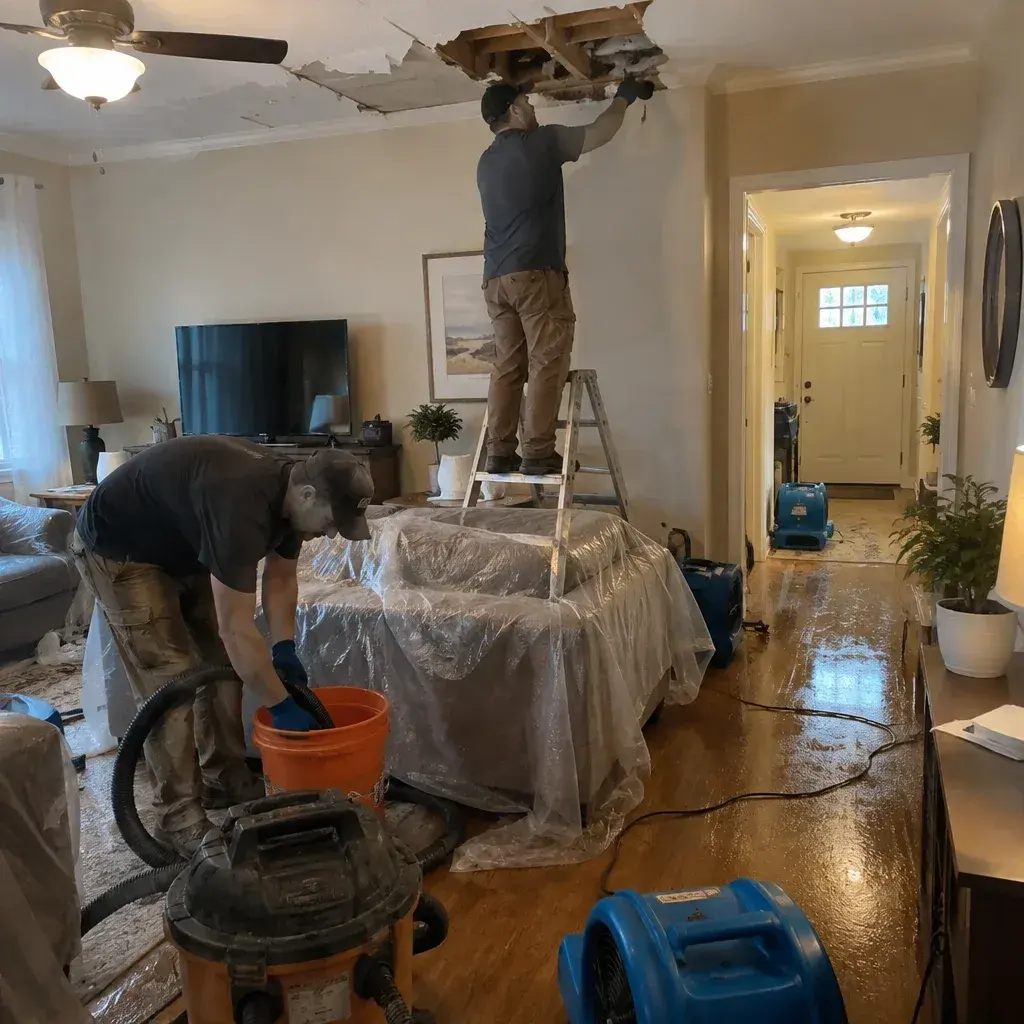
Water after a pipe break can keep spreading while the supply line remains pressurized. In Kentucky, frost and freezes can contribute, but the cause needs checking at your property. Water can soak into nearby materials before the full damage is visible. Pipe repair locates and fixes the line; extraction, drying, and rebuilding are separate restoration work. Stay clear of electrical hazards, and ask about concealed damage before access work begins.