How Small Leaks Weaken Plumbing
Kentucky frost and freezes can contribute to water lines freezing, though timing varies by location and terrain. Eastern Kentucky’s National Weather Service climatology documents that variation. Pipe condition can matter alongside outdoor cold when considering a copper failure.
Kentucky homes across markets near Morehead History and Railroad Museum, Toyota Motor Manufacturing Kentucky, and Kentucky Dam Village State Resort Park face different local conditions. A home's pipe route and insulation can shape how cold reaches its water lines. Unheated spaces can leave plumbing vulnerable when cold reaches them.
Kentucky households raise these concerns after cold reaches pipes in poorly insulated or unheated spaces. As water freezes, it expands and puts pressure on the pipe walls.
Keeping Clear of Water Hazards
- MATERIAL
- A copper fitting needs preparation and a joining method suited to that fitting before the supply line is returned to service.
- BREAK
- Corrosion or deformation near a split can reduce the usable pipe length for a local connection.
- ACCESS
- Rigid copper may need support so movement or weight does not strain a new joint.
- METHOD
- The damaged section is cut out in a way that leaves clean pipe ends for joining.
- VERIFY
- Tell the licensed pros we connect you with whether the leak appears near a fitting, along a straight pipe section, or at an exposed joint, so they can assess the repair and access.
- BREAK LOCATION
- A damp mark beneath a fitting can show that water is escaping even when the pipe has not begun to drip. Warm expansion and cold contraction can stress tight supports or a weakened joint, making a leak appear after seasonal change.
- FREEZE EXPOSURE
- an estimated $275–$1,100
Confirming the Repair Holds Under Pressure
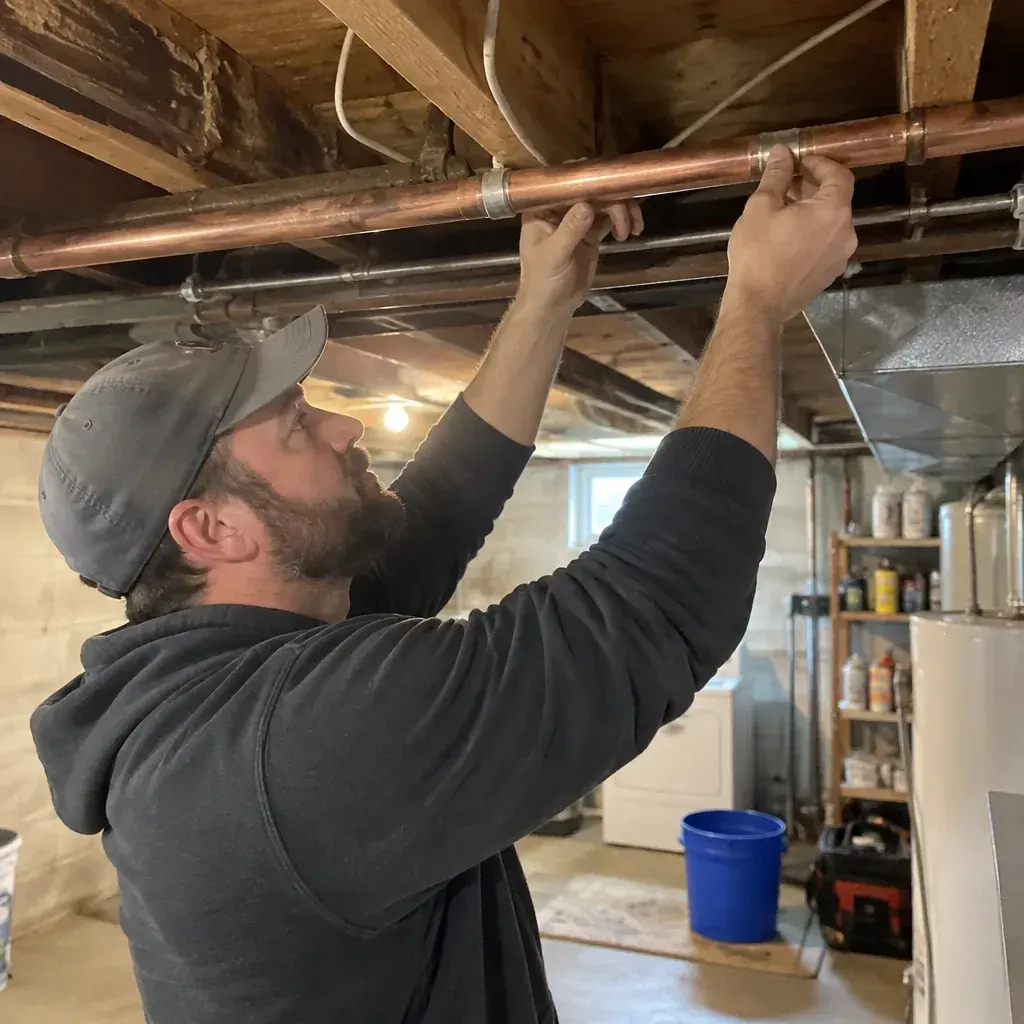
Copper fitting leak. Water escaping at a soldered joint can resemble a split copper pipe, yet the opening may be at the connection rather than in the tube wall. The plumber checks which part failed before deciding whether a localized repair may hold. On an exposed line, look for a rigid copper tube and inspect any visible fitting without touching a wet surface. Soldered or press-style copper joints differ from labeled plastic tubing. If the pipe is hidden or the material is unclear, leave identification for the plumber.
Accessing Pipe Behind Finished Surfaces
The plumber isolates the affected supply, traces the leak, and exposes the copper if needed. They inspect the failed area and nearby pipe for sound material, then choose a repair scope. A short cutout is possible when the remaining line can accept secure connections; damage beyond it changes how much copper must be removed.
For section replacement, the plumber prepares the cut ends and installs copper-compatible pipe and fittings using the specified joining method. They support the line as needed to protect the new connection from strain. After restoring supply pressure, they check the joints and fixture flow before closing any opened surface.
A Kentucky repair may be complete once the damaged pipe is replaced, the line holds under pressure, and water flow is confirmed. If access to concealed pipe remains unfinished, another visit may be needed. Ask what must happen before the area can be closed; routine visits need a clear reason.
WHEN A BURST REPAIR ENDS AND ROUTINE CARE BEGINS
| Freeze Context |
Replacement Need |
|---|
| One water-line failure | Check electrical hazards |
| Water reappears following a prior line repair | Safe supply shutoff |
| Damage at intervals along a water route | Broken pipe replaced; delivery restored |
PERMIT SCOPEKentucky’s State Plumbing Code and plumber licensing rules govern plumbing work. State guidance treats leak repairs differently from specified installations and replacements, so permit needs depend on the actual scope and applicable rules. Ask the pro to describe the work planned and record the repair or replacement performed on the invoice.
Kentucky's Seasonal Freeze Conditions
Water that keeps escaping can soak insulation, flooring, framing, and finishes around the copper line. Prolonged moisture can soften materials and widen the area needing attention. Burst Pipe Repair fixes and checks the supply pipe. Visible staining can help identify finishes that need review after the pipe is fixed.
Keep a Clear Path for Assessment
In Kentucky, gather records of earlier plumbing changes near the affected run; they can help the plumber understand access. Read a pipe stamp only when it is plainly visible, without handling the line. If it confirms copper, share that clue with the pros we connect you with through the referral site. Leave fitting work and pressure checks to the plumber.
Keeping Others Clear of Repair Work
Water on a Kentucky floor after a copper line splits can make nearby electrical equipment dangerous. Keep clear of wet rooms if outlets, wiring, or appliances may be affected. Treat standing water as a hazard until the electrical risk is clear. Do not touch wet electrical devices. Call for plumbing help if safe access is uncertain; the repair addresses the pipe, while drying may need separate help.
Is Water Cleanup Charged Separately?
Moisture can spread through nearby materials before a leak leaves a clear mark on the ceiling.A leak beside Shaker Village of Pleasant Hill may be visible; one near General Butler State Resort Park may be concealed. The $350–$1,300 band concerns plumbing work on the reported break. If tracing reveals more damaged pipe, scope can change. Cleanup, drying, and rebuilding are separate. In Kentucky, ask the pros we connect you with to confirm visit charges and included work.pricing guide lays out possible charges and the details that move a final quote.